
About
Technology is transforming the way we search for, consume, and use information. What was once a list of blue links is now an extremely adaptable interface capable of supporting users in a wide range of tasks. Given this ongoing evolution, the question arises: what kind of search systems will we have in the future, and which tasks will they support?
The DESIRES conference brings together researchers and practitioners from academia and industry who work on search and retrieval systems to present and discuss the latest innovative and visionary ideas in this field. DESIRES is the place to get feedback from our community on ideas and prototypes before they undergo formal evaluation.
Visionary ideas thrive on diversity. DESIRES is committed to keeping conference costs as low as possible and actively seeks sponsorships to support the participation of researchers from low-income countries, particularly those at an early career stage. Financial barriers should not prevent talented researchers from joining the discussion.
Important Dates
| 2026-12-17 | Abstract submission |
| 2027-01-18 | Notifications |
| 2027-03 17–19 | Conference in Cologne, Germany |
| 2027-05-31 | Paper submission to IRRJ (optional) |
Call for Contributions
DESIRES invites submissions presenting novel ideas, approaches, and systems in the broad area of search and information retrieval. The conference is built around discussion and exploration: it is a venue for work that is thought-provoking or unconventional—ideas that benefit from open debate rather than polished evaluation.
Contributions are submitted to DESIRES as abstracts. A typical abstract is a concise rationale and description of a prototype system, optionally illustrated with screenshots and/or early empirical results. Prototypes are central to DESIRES, and the conference program dedicates substantial time to hands-on demonstration and discussion. Beyond prototypes, DESIRES also welcomes accounts of lessons learned from building or deploying search systems, position statements and research agendas on where the field should go next, provocations challenging assumptions, metrics, or methodologies that the community takes for granted, and half-baked ideas—early-stage concepts that are intellectually compelling even in the absence of a working implementation.
Relevant topics include, but are not limited to:
- The future of information interaction
- Novel metrics for relevance, trust, credibility, or social impact in search
- User-centred retrieval and personalization: long-term user modeling, cross-session memory, privacy, data minimization
- New paradigms for AI-assisted information seeking
- Agentic IR and search engines designed for autonomous agents
- Retrieval-augmented generation and generation-augmented retrieval
- Knowledge-grounded search: integrating knowledge graphs, structured data, and semantic representations
- LLMs as knowledge sources: capabilities, limitations, and knowledge management for search
- Knowledge-grounded search: integrating knowledge graphs, structured data, and semantic representations
- Query interpretation, augmentation, and reformulation — across structured, semi-structured, and unstructured query languages
- Systems for under-explored and under-represented search scenarios and information needs
- Adaptations of search systems to user groups, languages, or modalities
- Search interfaces for bias disclosure, epistemic uncertainty, or learning support
- Explainability, transparency, and responsible AI in search and retrieval systems
- Simulators for search behavior of specific personas or populations
- Mock-ups to illustrate generative search engine effects on users and society
- Approaches to combat misinformation and manipulation in search results
- Red-teaming methods for identifying vulnerabilities in search engines
- Efficiency/cost tradeoffs in LLM-based retrieval systems
Abstracts will be reviewed on the basis of novelty and potential. A rigorous experimental evaluation is neither expected nor required. Reviewers will ask: Is this worth discussing? Accepted abstracts will be distributed to conference participants and published on this web page if the authors agree to it.
To encourage broad participation and diverse voices at DESIRES, each author may present no more than one accepted paper at the conference. While the same person may be a co-author on multiple submissions, a different registered presenter must be designated for each accepted paper. In exceptional cases, the program chairs may make final decisions to ensure a balanced program.
Authors of accepted abstracts are invited, after presenting at the conference, to extend their work into full journal papers for the post-proceedings, published in a special issue of the open-access Information Retrieval Research Journal (IRRJ) after a light second review phase—the purpose of this review phase is not to exclude submissions, but to ensure the quality of the texts. The post-proceedings submission is the appropriate stage for complete experiments, formal evaluation, or user studies, and to incorporate ideas that emerged from conference discussions. While the abstract serves as a conversation starter, the journal paper is the finished contribution.
Prepare and submit your abstract following the IRRJ submission guidelines. Abstracts should be between 2 and 5 pages long (including the references). No cover letter is required for abstract submission.
Venue
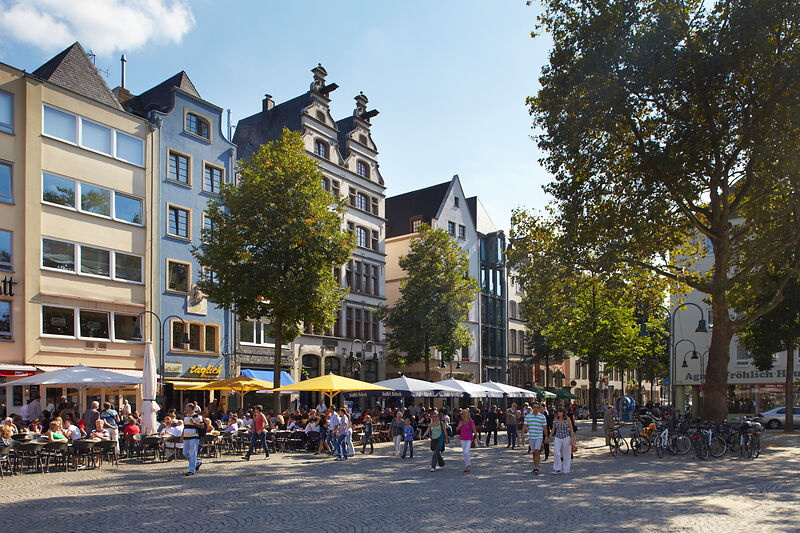
DESIRES 2027 will take place at the GESIS Institute, which is about a 10-minute walk from Cologne Central Station; enroute, one passes the famous Cologne Cathedral.
GESIS – Leibniz Institute for the Social Sciences
Unter Sachsenhausen 6–8
50667 Cologne
Germany
View in Google Maps





Organization
General Chairs
E-Mail: general-chairs@desires-conf.org

(GESIS – Leibniz Institute for the Social Sciences, Germany)

(RMIT University, Australia)
Program Chairs
E-Mail: program@desires-conf.org

(University of Washington, United States of America)

(University of Tübingen, Germany)

(Amazon, Luxembourg)
Post-Proceedings Chair
E-Mail: post-proceedings@desires-conf.org

(Radboud University, The Netherlands)
Publicity Chair
E-Mail: publicity@desires-conf.org

(University of Illinois, United States of America)
Sponsorship Chair
E-Mail: sponsorship@desires-conf.org

(LexisNexis, United States of America)
Social Events Chairs
E-Mail: social-events@desires-conf.org

(Bauhaus-Universität Weimar, Germany)

(TH Köln, Germany)
Web Chair
E-Mail: web@desires-conf.org

(Friedrich-Schiller-Universität Jena, Germany)
Steering Committee
E-Mail: steering-committee@desires-conf.org

(Amazon, United States of America)

(University of Padua, Italy)
Sponsors
Friends